
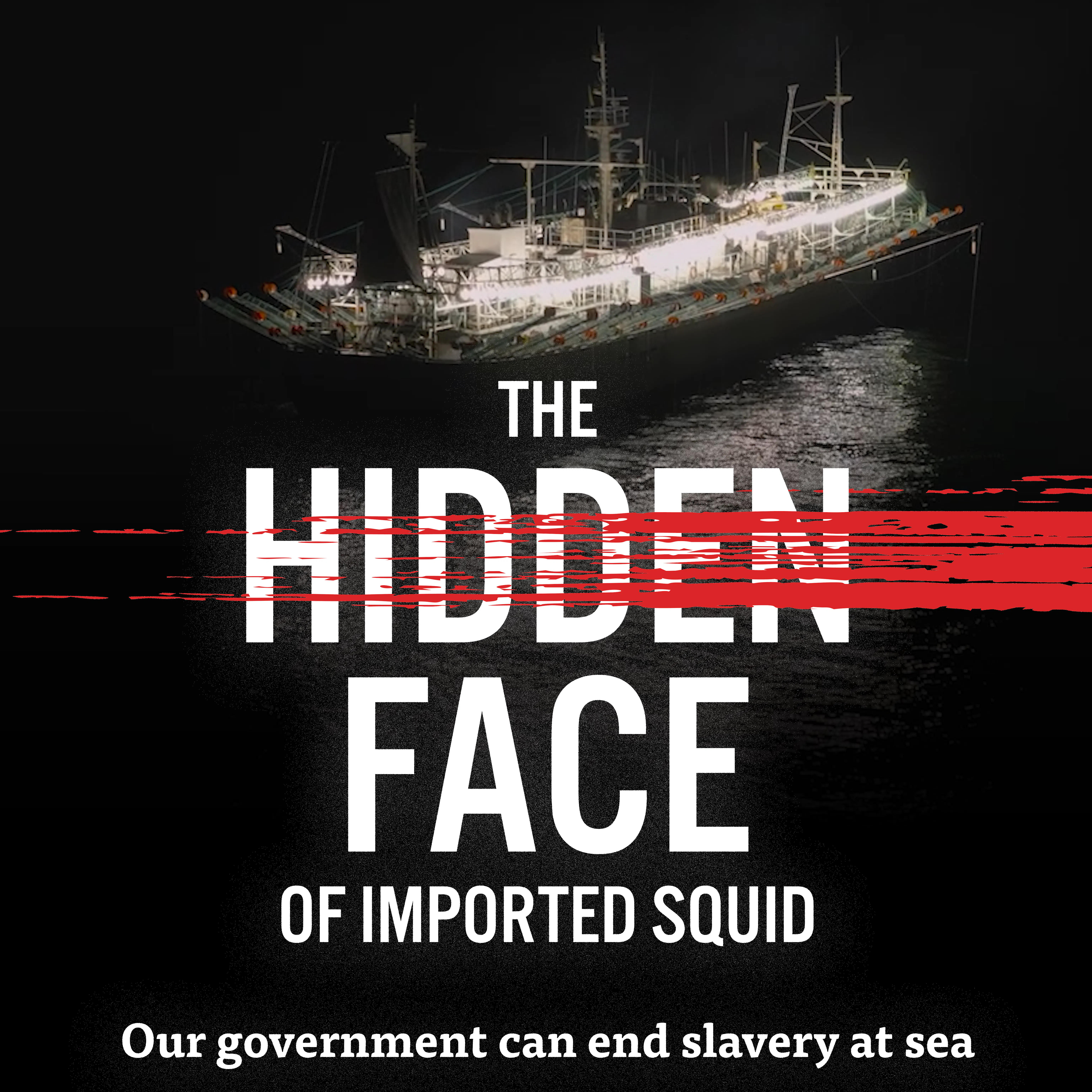

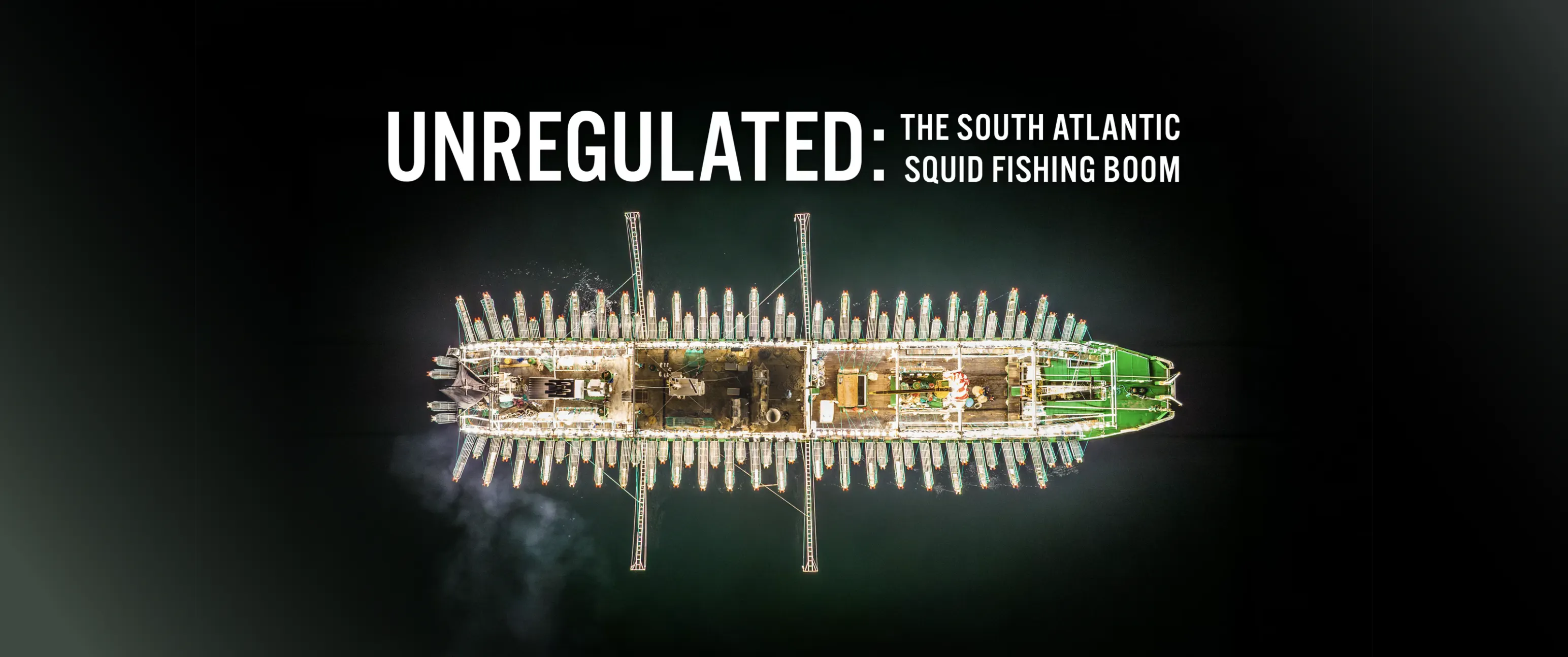
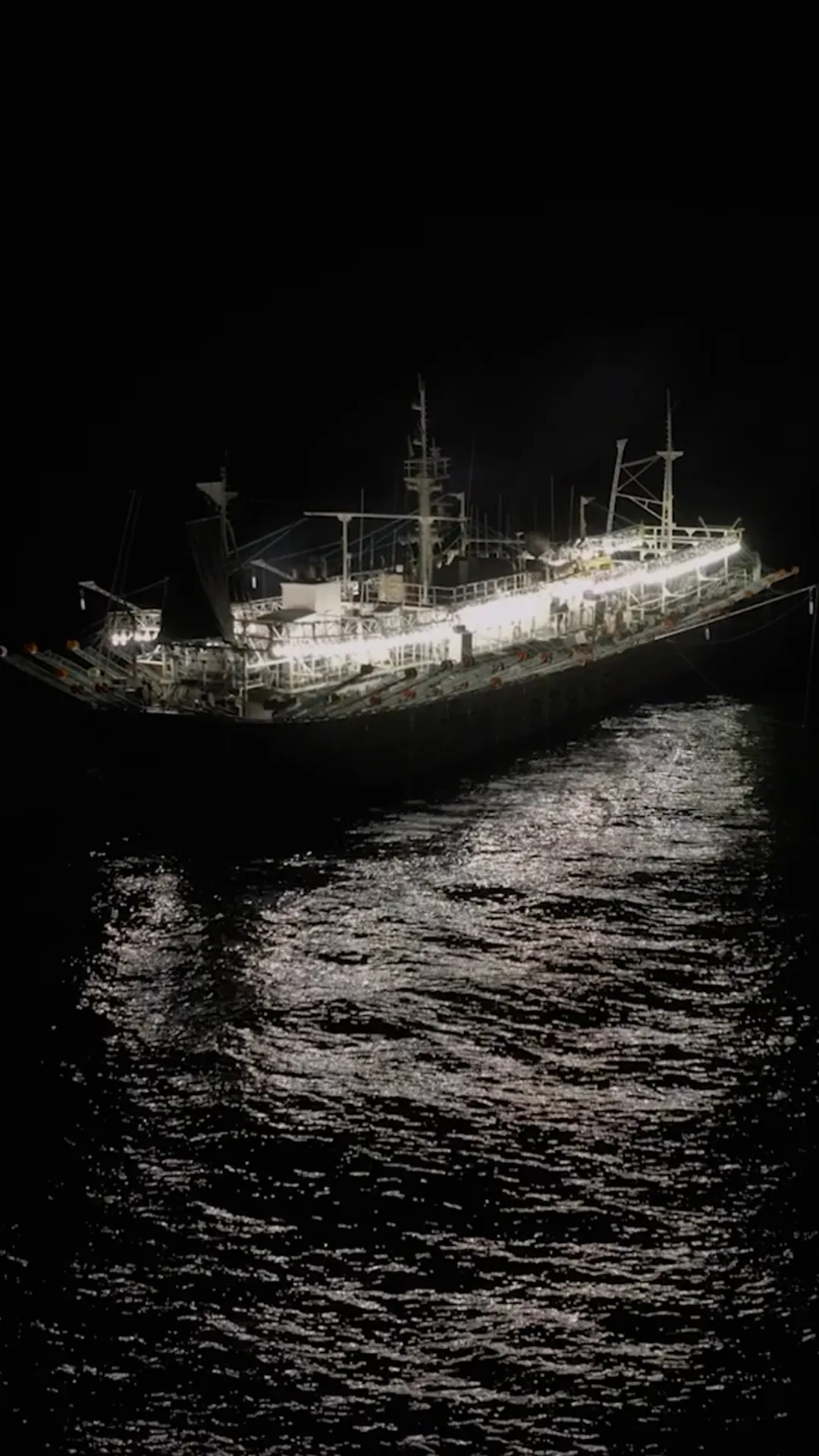
Investigations conducted by the Environmental Justice Foundation (EJF) reveal an alarming reality: systematic violence and forced labor within high-seas squid fishing fleets. In lawless waters, these vessels operate without regulation or oversight, abusing people and wildlife, exploiting international waters without restraint, and jeopardizing entire ecosystems and the economies that depend on them.
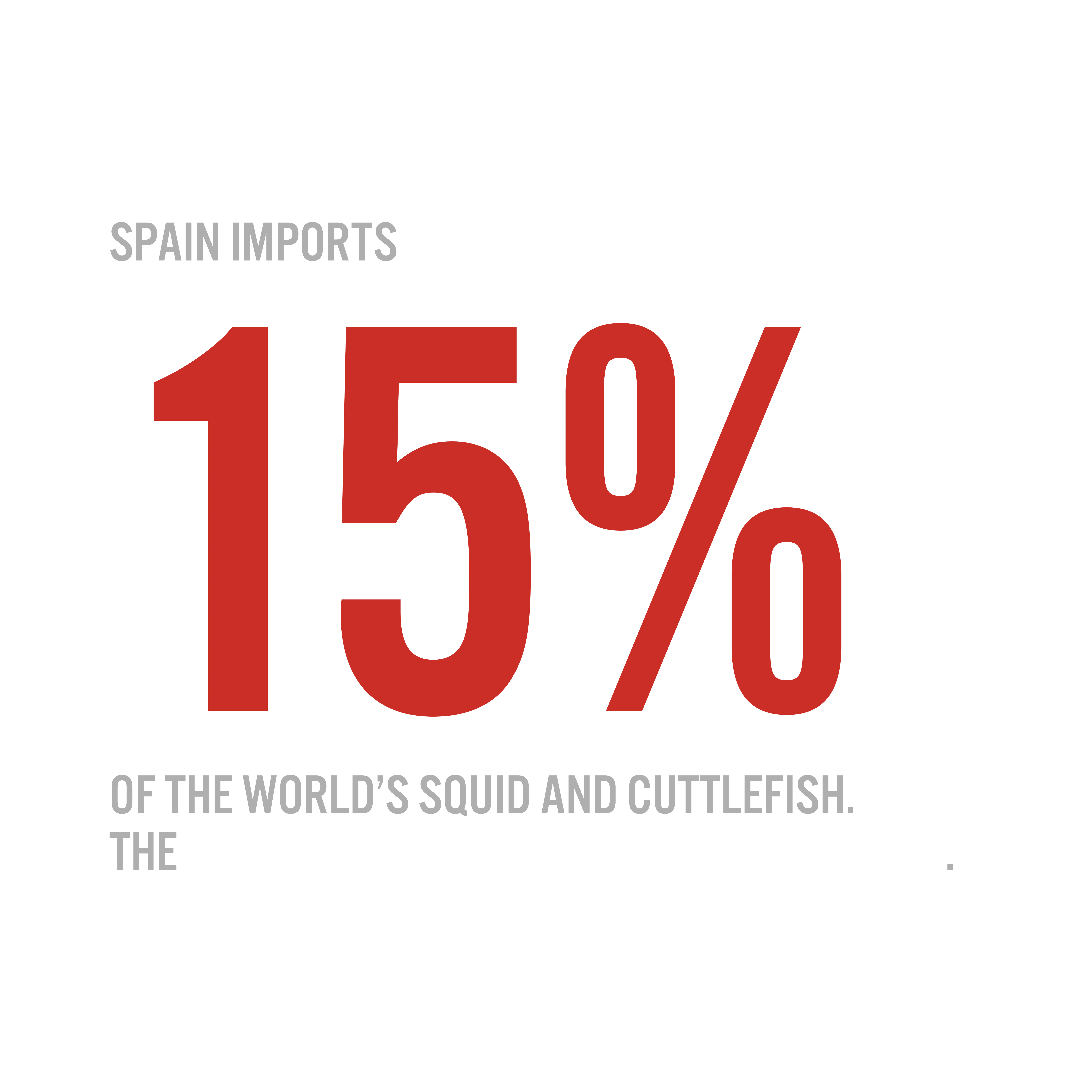
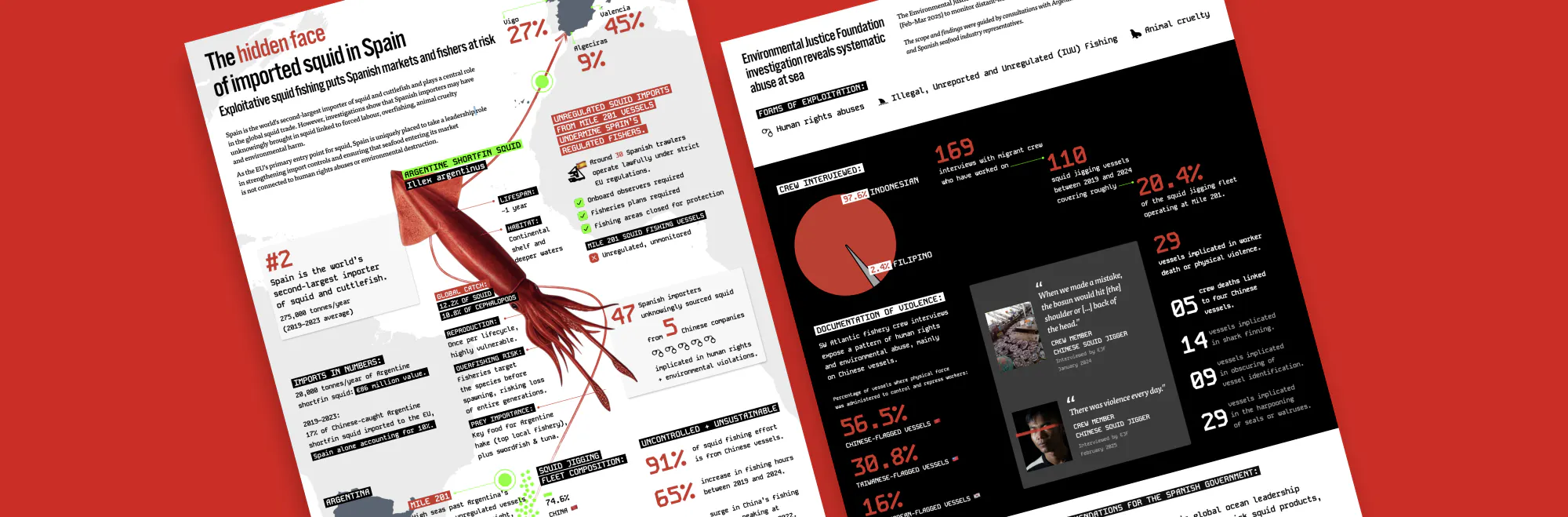
Every year, Spain imports €1.5 billion of squid and cuttlefish, and is the gateway to the EU market — allowing squid to reach Italy, Portugal, France, Greece, and beyond.
Exploitation in all forms

Human rights
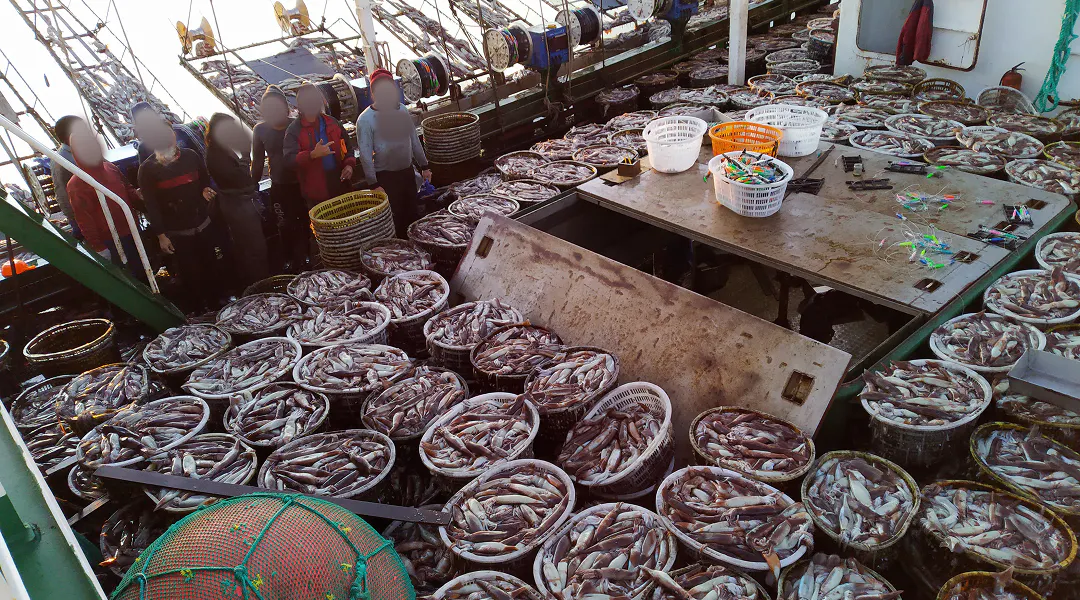
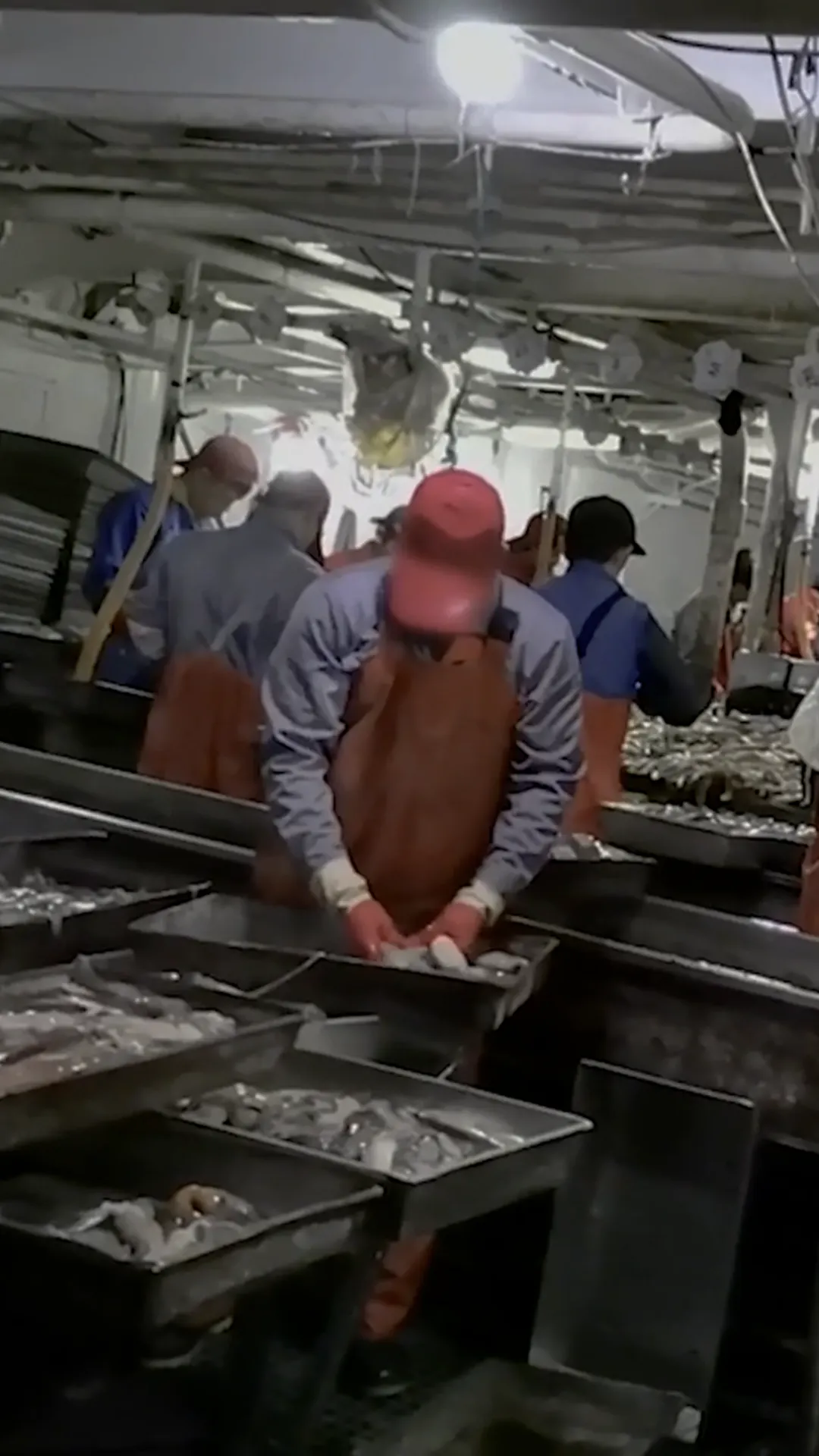
Dozens of interviews reveal systematic human rights and labour violations — including crew abuse, physical violence, withheld wages, exploitation, degrading living conditions aboard squid vessels, and even deaths among migrant crew members.
ㅤㅤ
Environment
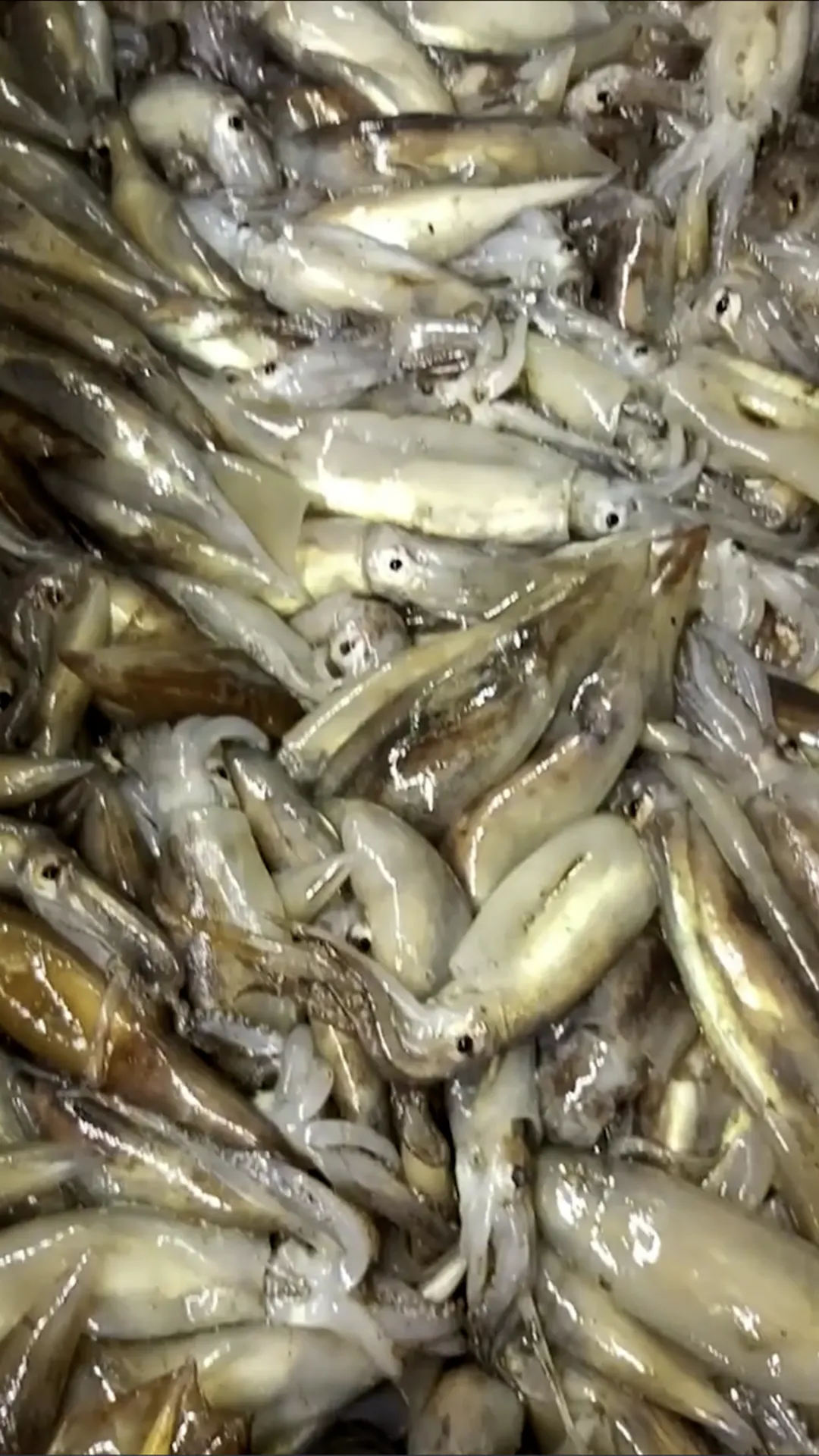
The biologically and commercially important Argentine shortfin squid, already threatened by climate change, is uniquely vulnerable to overfishing and population collapse, causing cascading ecosystem devastation across the region.
ㅤㅤ
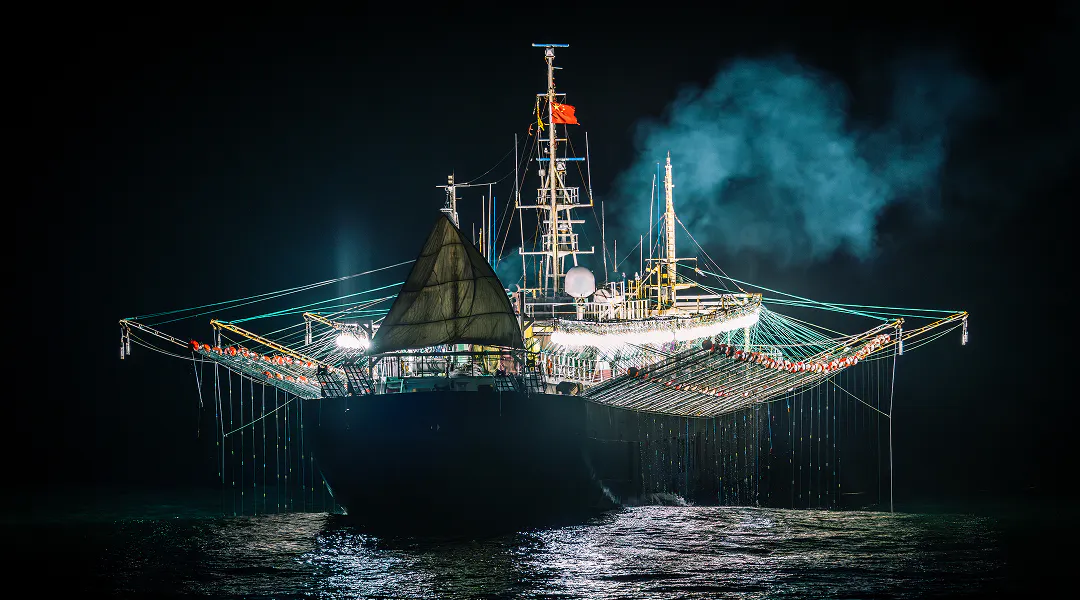
Illegality
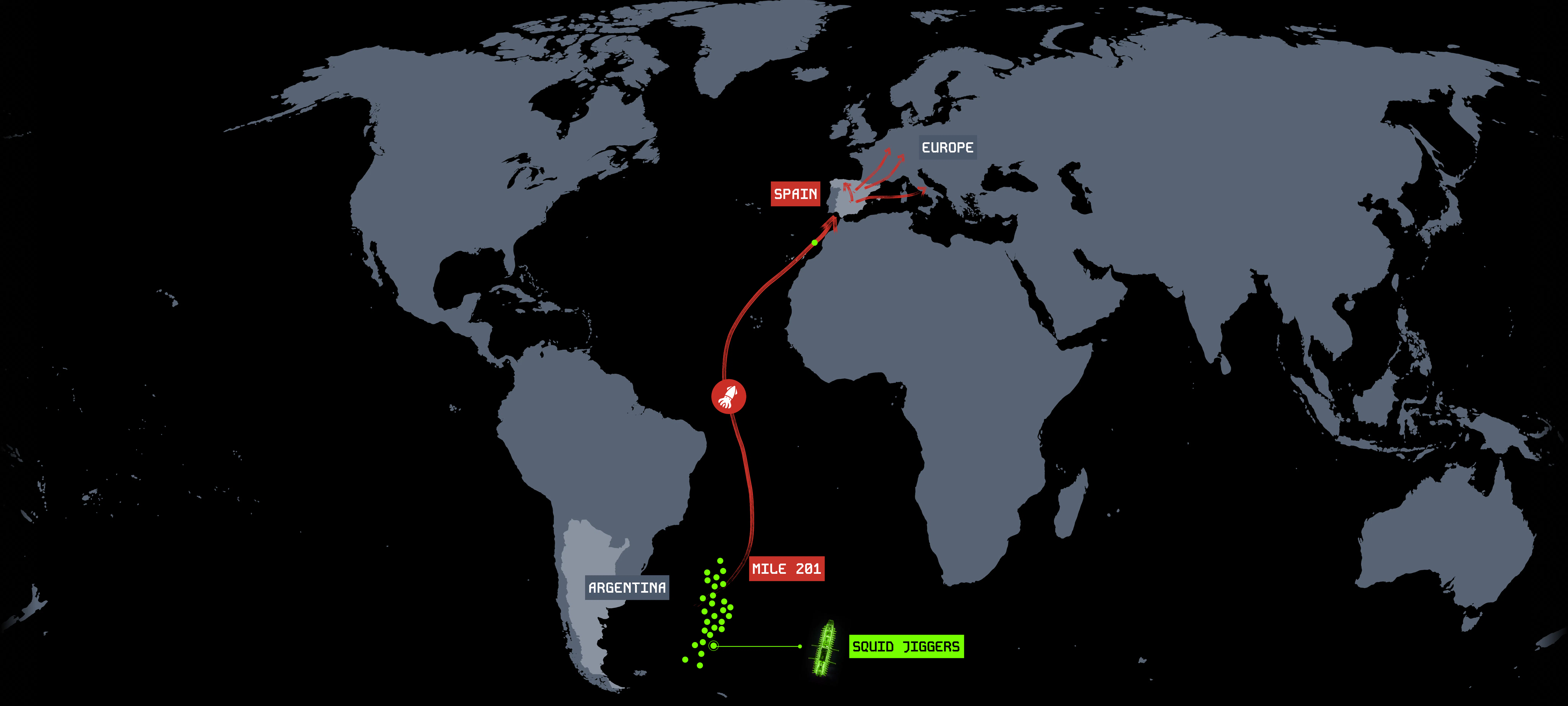
The opaque nature of squid fishing — vessels operating for years beyond national jurisdictions — promotes uncontrolled illegality, with vessels connected to criminal activity known to export their catch to Spain, the UK and the EU.
ㅤㅤ
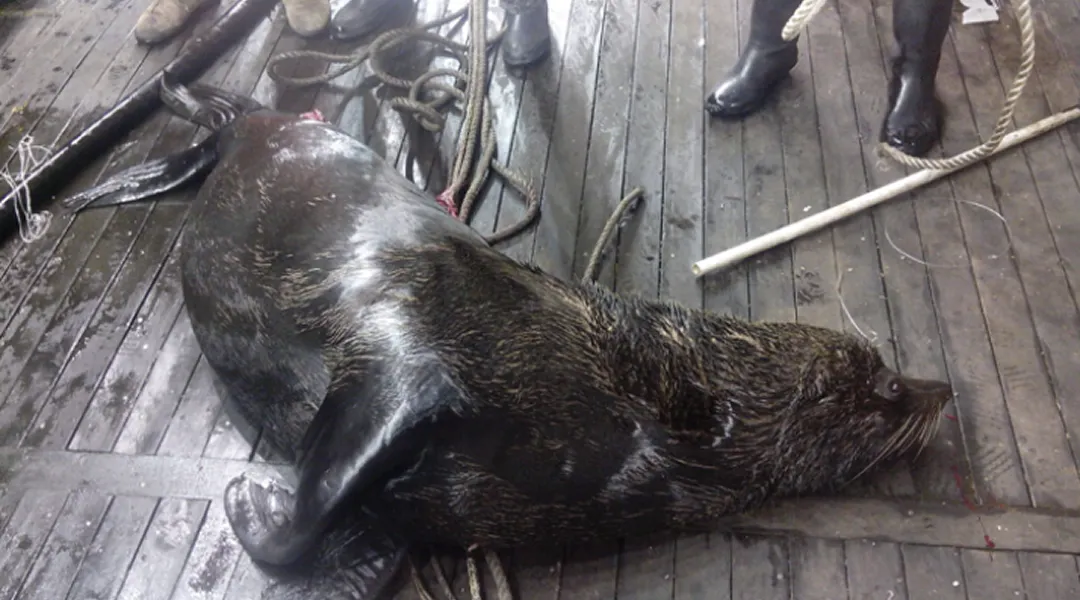
Animal abuse
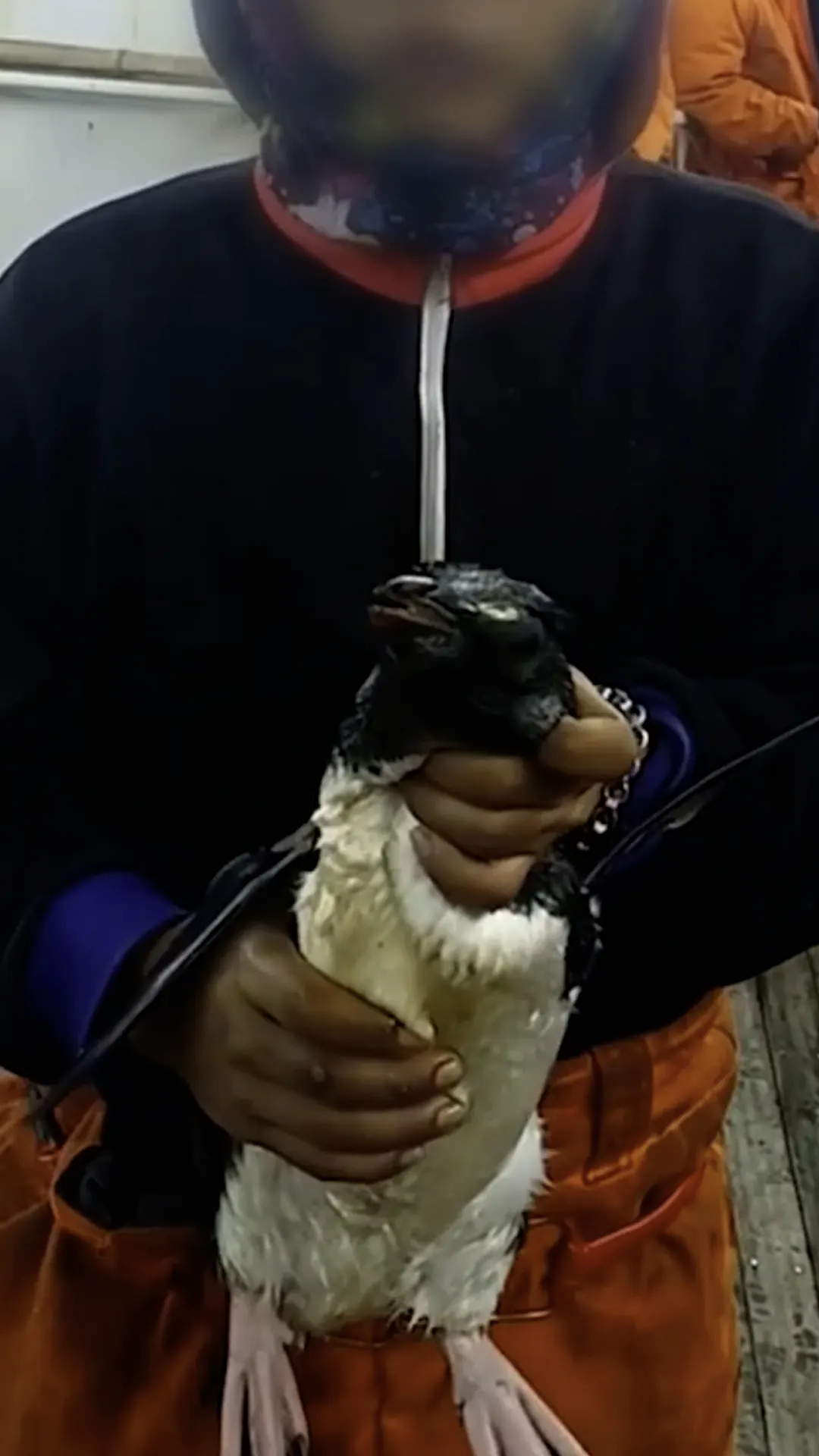
Prolonged, cruel and gruesome animal abuse coincides with human rights abuses, including shark finning and harpooning, bludgeoning and intentional capture of protected species, such as fur seals and penguins.
ㅤㅤ
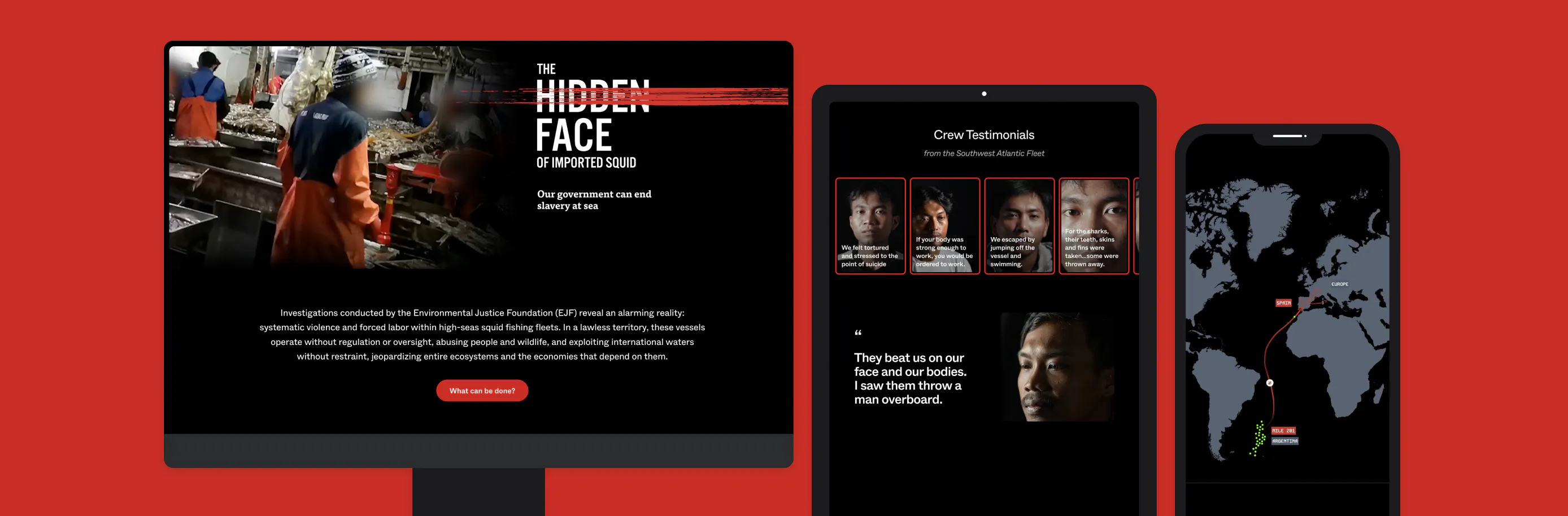
Crew Testimonials
from Chinese vessels in the southwest Atlantic






WATCH NOW
How can Spain change the status quo?

Assess current squid import controls, with a focus on high-risk species like Argentine shortfin.

Reinforce and adapt enforcement checks, especially for squid from unregulated high seas with high IUU and forced labour risks.

Work with the European Commission to prevent weak enforcement loopholes across EU Member States — where squid linked to IUU fishing may enter through countries with less stringent controls.
Improve coordination with Spanish-flagged vessels operating in the Southwest Atlantic.

Promote international cooperation to strengthen governance of squid fisheries in the region.

Endorse and implement the Global Charter for Fisheries Transparency, ten low- to no-cost recommendations to ensure sustainable, ethical and legal fisheries free of human rights abuses.
ㅤ
ㅤ
Dive Deeper
ㅤ
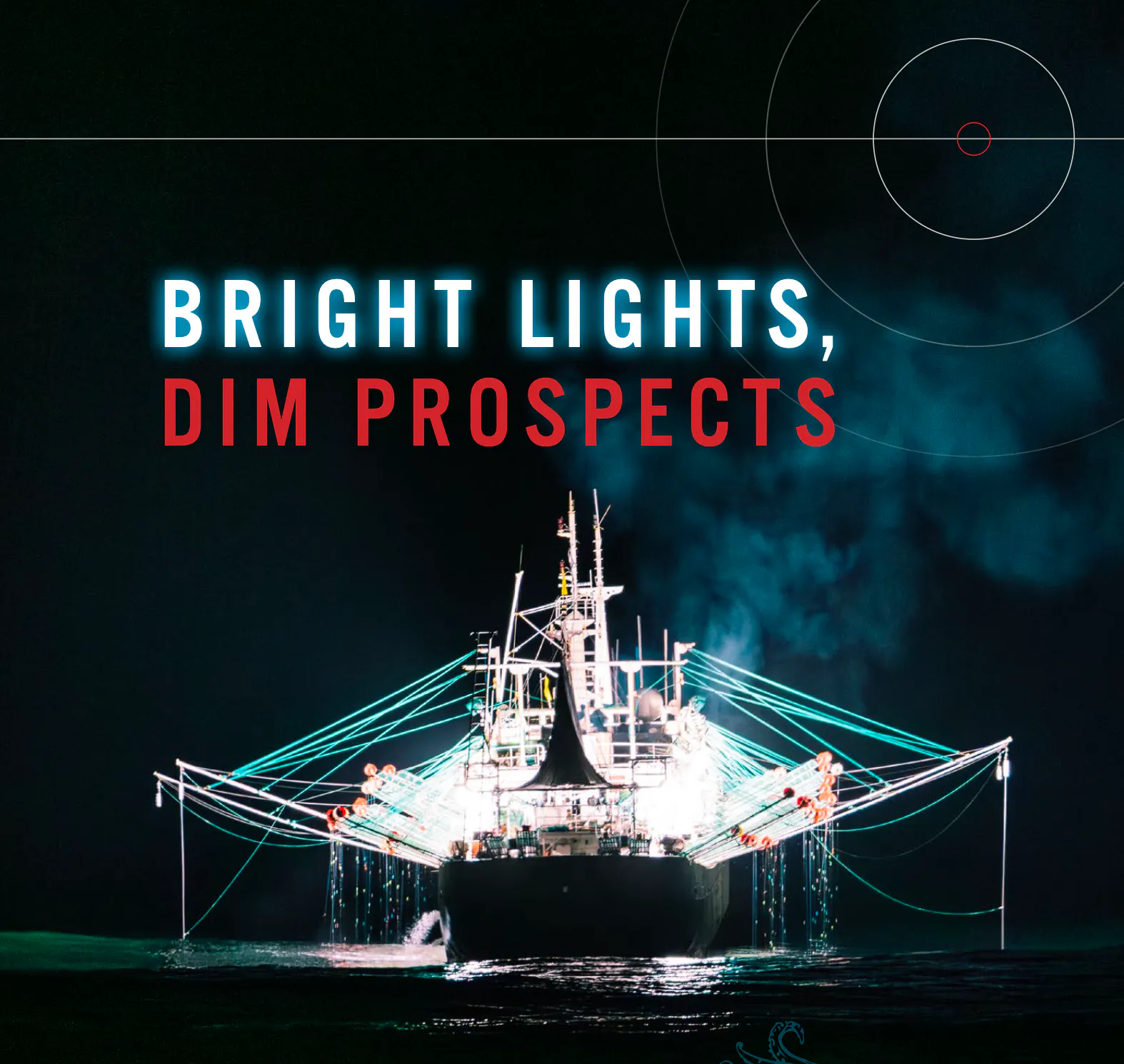
The urgent need to address unregulated squid fishing in the Southwest Atlantic to avert a looming environmental crisis
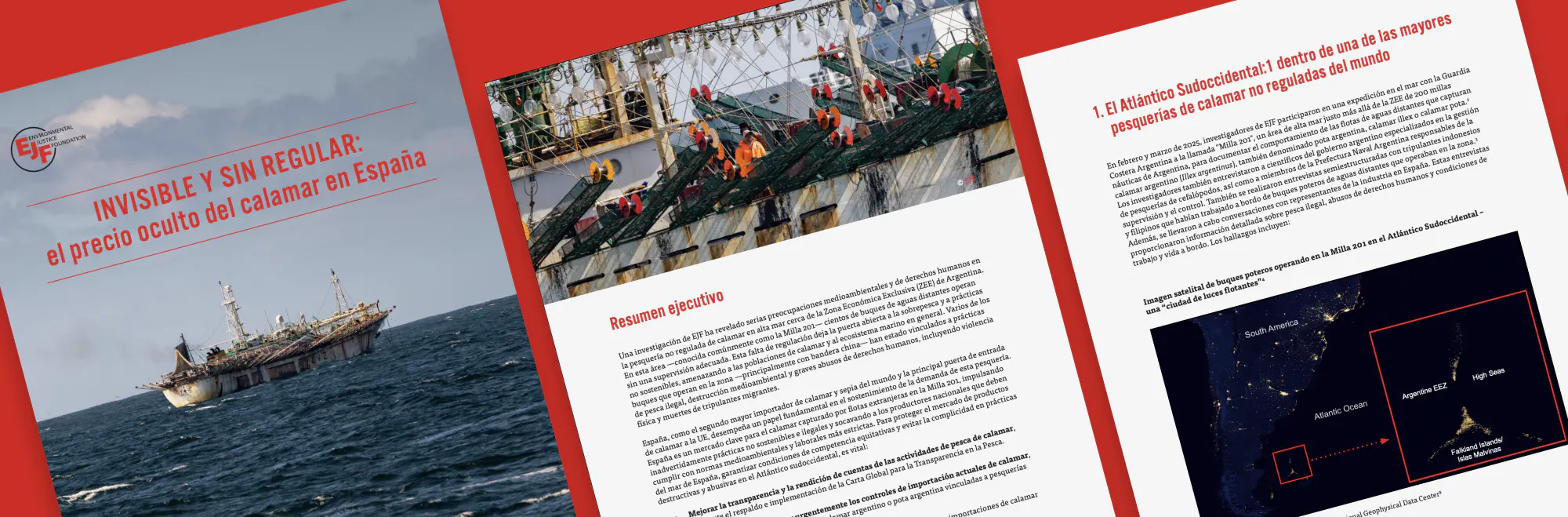
Recent Press
FAQs
Aren't there laws to govern international waters?
What role does Spain play in the global squid trade?
What is "Mile 201"?
Why has EJF focused its investigation on the SW Atlantic fishery, so far from Spanish waters?

Stay up to date
Get the latest news on upcoming reports and research on squid fisheries and their relationship with Spain.
Powered by


ㅤ